
If you have ever logged into your Ancestry account to check your DNA results and found that your Scottish roots have suddenly become Ulster, or watched your Welsh ancestry shrink while a surprising chunk of Cornish appeared out of nowhere, you are far from alone. These shifts cause real confusion, and the confusion is often sharpest for those of us who have spent years building a family tree with documents and records stretching back to the early eighteenth century. It can feel as though the science is contradicting the paper trail. In this post, we will look at what these updates actually mean, why the numbers move, and why your own research remains every bit as valuable as it ever was.
To start at the beginning, an Ancestry DNA test – sometimes called a genealogical DNA test – is a home-use genetic test that analyses specific locations in your genome to estimate your ethnic background and identify living relatives. By examining particular genetic variants, testing companies compare your DNA profile against historical data and reference populations drawn from all over the world, tracing the geographic history of your family in the process. If you have tested through Ancestry, your results include a percentage-based breakdown of your genetic origins mapped across more than 3,600 geographic regions worldwide, an interactive timeline showing the historical migration paths, movements and cultural shifts of your ancestors over time, DNA relative matching against the world’s largest consumer DNA database, and a parental breakdown that separates your genetic data by parent so you can see exactly which ethnicities, journeys and matches came from your mother and which from your father.
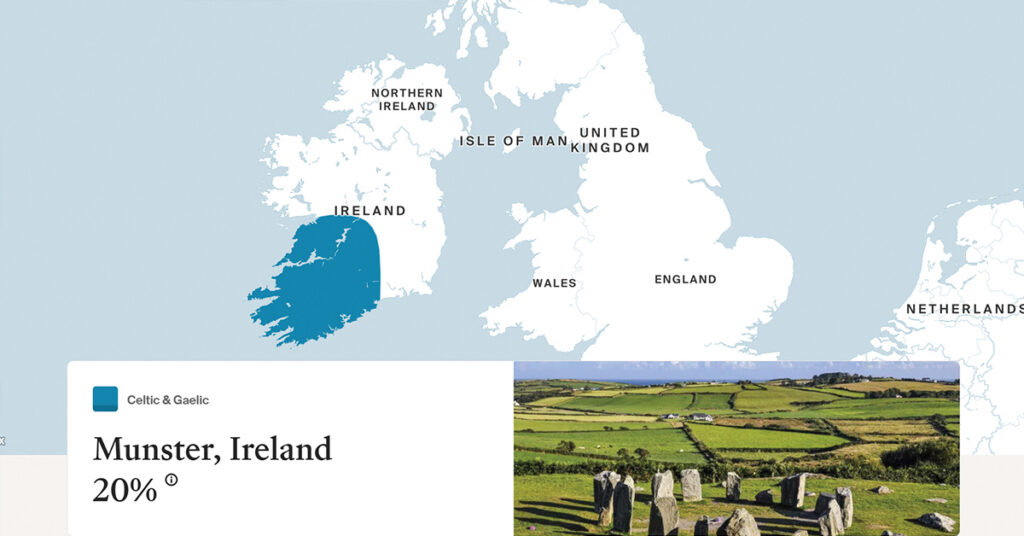
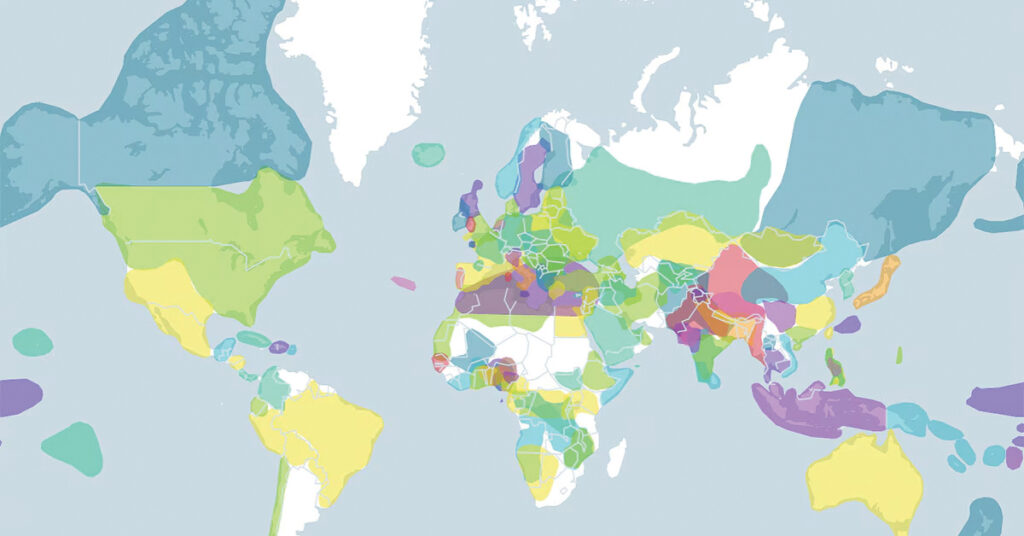
Your initial results, however, are not the end of the story. At regular intervals, Ancestry releases updates to its DNA regions, and this is where the confusion begins. When an update goes live – historically called the Ethnicity Estimate, now known as the Ancestral Regions report – every user’s raw genetic data is automatically re-processed, free of charge. Because the science behind DNA interpretation is constantly evolving, these automatic updates can noticeably change what you see on your dashboard. Your percentages and regions shift, but your actual DNA never changes: what changes is Ancestry’s method for reading it. A 20% Irish estimate, for example, might drop to 15% as the algorithm gets better at separating Irish DNA from Scottish or English DNA. New regions also appear as broad categories are split into far more specific ones, with single national categories giving way to state-level, regional or highly specific ethnolinguistic groupings. Old regions can disappear too, including small trace percentages if the updated algorithm concludes they were simply genetic noise.
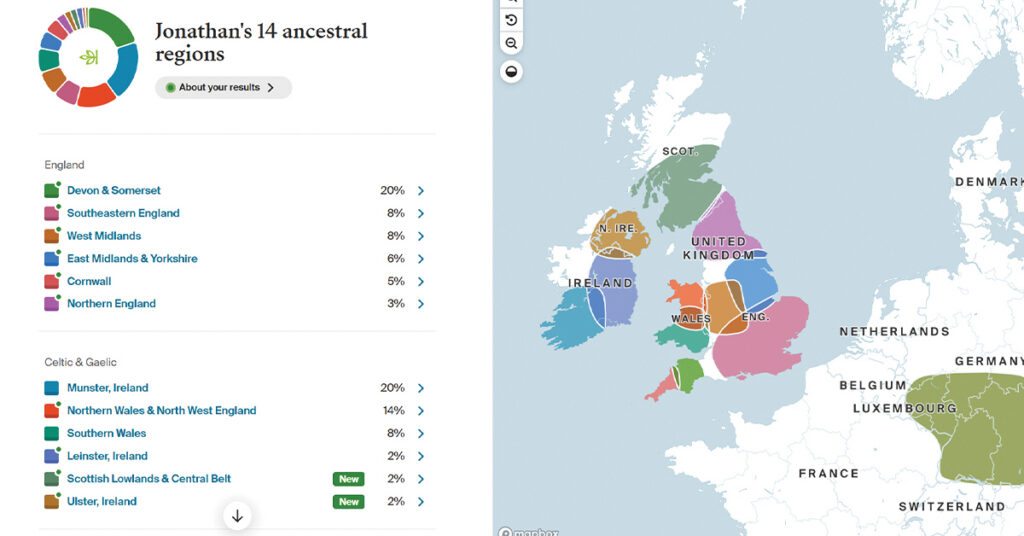
Behind all of this sits the reference panel. To calculate your background, Ancestry compares your DNA segments against a vast database of DNA from people whose families have verified deep roots in a single geographic area for generations. During an update, thousands of new global samples are added to that panel, and a larger, more diverse reference pool gives the algorithm a clearer dictionary to match your genetic signatures against. Ancestry also continuously updates its computational backend and AI tools, and newer versions use advanced algorithms that compare your DNA sequences alongside artificial intelligence transformers. Rather than simply spotting broad generic patterns, the system now reads subtle, almost linguistic-like dialects in your genome, which allows it to distinguish between closely related neighbouring populations – differentiating French-Canadian lineages from continental European French descent, for instance. To make the map easier to digest, Ancestry also restructures how your results are presented. Recent updates introduced macro-regions, so instead of a flat and confusing wall of minor subregions, genetically similar populations are neatly nested under broader cultural or geographic umbrellas, such as grouping particular regional results under a collective Celtic and Gaelic or Nordic heading.
It is worth stressing what these updates do not touch. Any genealogical research, documents or family trees you have attached to your profile remain entirely untouched, and so do your DNA matches – your list of living relatives and your privacy settings are not altered by ethnicity or region updates.
So why do people so often lose, say, their Scottish ancestry despite holding solid paper trails that prove it? Put simply, the British Isles and Northwest Europe share heavily overlapping genetic signatures after thousands of years of migration, invasion and intermarriage, and Ancestry’s algorithm has historically struggled to separate Scottish, English, Irish and Northwestern European DNA from one another.
In a recent update, Ancestry refined its reference panel to try to separate these groups more cleanly, which means that if your Scottish ancestors lived near the Lowlands or the borders, or had Anglo-Saxon roots, the new algorithm may categorise those specific DNA segments as England and Northwestern Europe, or as Ireland, rather than Scotland. The tell-tale sign is usually in the rest of the picture: your English or Irish percentages will often have risen by almost exactly the amount your Scottish percentage fell.
Something similar happens if your paternal line includes Scottish ancestors who spent time in Northern Ireland – the Ulster-Scots or Scotch-Irish – before migrating elsewhere. Their genetic signatures are frequently identical to populations in Northern Ireland or parts of England, and Ancestry’s algorithm will often read Ulster-Scots profiles as entirely Irish or English rather than Scottish.
The science behind the analysis is consistently changing, and it will be fascinating to see how it evolves in the years ahead. For now, the best approach is to take what is genuinely useful from your DNA results while keeping your faith in what your own paper-based research tells you – because that is the part of the story only you can tell.