
During the 18th and 19th centuries, thousands of Welsh men, women and families crossed the Atlantic in search of opportunity, freedom and survival. Their journeys helped shape communities across North America, while leaving a lasting imprint on Welsh history, culture and identity. During our own projects we have been fortunate to research several fascinating families with branches in North America, these have included the Skinner’s of Nebraska, the Phillips family of Ohio and the Morgan’s from Winnipeg.
Migration from Wales was driven by a mix of economic pressure, social change and hope for a better life.
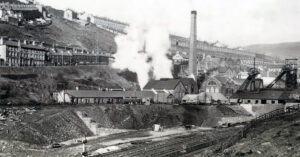
By the late 1700s, traditional rural livelihoods were under strain. Enclosure of common land, rising rents and population growth made it harder for farming families to survive. Later, the Industrial Revolution transformed Wales rapidly, particularly in the south. While coal mining and ironworks created jobs, they also brought dangerous working conditions, overcrowded towns and economic insecurity.
For many, North America offered land, employment and the promise of independence. Religious freedom was another powerful motivator. Nonconformist groups such as Quakers, Baptists and Methodists faced restrictions in Britain and saw the New World as a place where they could worship freely and build communities around shared beliefs.
Welsh migration to North America began as early as the 17th century, but it accelerated significantly during the 18th and 19th centuries.
One of the earliest and most famous settlements was in Pennsylvania. William Penn actively encouraged Welsh Quakers to settle there, and by the early 1700s, Welsh-speaking communities were well established. Place names such as Bryn Mawr, Bala, Narberth and Radnor still reflect this heritage today.
As migration continued, Welsh settlers spread further west, establishing communities in Ohio, New York, Wisconsin and later in states such as Minnesota and Iowa. Many travelled as families or church groups, helping to recreate familiar social and cultural structures in unfamiliar surroundings.

Welsh migrants brought valuable skills with them. Farmers worked the land, while miners and ironworkers found employment in America’s growing industrial regions. Welsh expertise in coal mining was particularly sought after in Pennsylvania and later in the Appalachian region.
Life was not easy. Long sea voyages were dangerous, and early settlement involved hard physical labour, isolation and uncertainty. However, letters home often spoke of higher wages, greater opportunity and the possibility of owning land — powerful incentives for others to follow.
Despite the pressures of assimilation, many Welsh migrants worked hard to preserve their language and traditions. Welsh-language chapels were central to community life, hosting religious services, social gatherings and education. Newspapers printed in Welsh circulated among immigrant communities, keeping people connected to their heritage.
One of the most enduring traditions was the eisteddfod. Welsh settlers organised eisteddfodau across North America, celebrating poetry, music and performance, and reinforcing a shared cultural identity far from home.
By the late 19th century, Welsh migration began to slow. Conditions in Wales gradually improved, while later generations of Welsh Americans increasingly adopted English as their main language and integrated into wider society.
Even so, the legacy of Welsh migration remains visible. Welsh place names, chapels, family surnames and cultural societies continue to tell the story of a people who carried their identity across an ocean.
The migration of Welsh people to North America was more than a movement of labour — it was a transfer of culture, values and community spirit. Today, descendants of Welsh migrants continue to explore their roots, and the shared history between Wales and North America remains a powerful reminder of resilience, adaptability and hope.
For many families, the Atlantic crossing was a leap into the unknown. For history, it was the beginning of a story that still resonates on both sides of the ocean.