
I only ever intended to buy a couple of vintage postcards of Newport, just to add some visuals to a family history story I was writing. Fast forward a year, and I now have over 50 old postcards – some posted, others never sent.
Some were easy finds on eBay, while others took a little more effort, tracked down to the very countries they had originally been sent to. What began as a simple purchase quickly became an engrossing hobby – not just for the wonderful old photographs on the front, but for the scribbled messages on the back, and what they reveal about the people who wrote them and the times in which they lived.
Most of the cards date from the early years of the 20th century, when sending and collecting postcards was something of a national obsession. Now known as the “Golden Age of Postcards,” this period – roughly 1895 to 1915 – saw postcards become a global phenomenon, used much like modern text messages or social media. In 1913 alone, more than 900 million postcards were posted in Great Britain – an average of around 20 per person.
The names of the manufacturers tell their own story. Companies such as Raphael Tuck & Sons, Valentine & Sons, and F. Frith & Co were major players, alongside smaller brands like Peacock and Dainty. Many of these cards were printed in Germany, which at the time led the world in high-quality lithographic printing.
So why vintage postcards of Newport? I grew up there, spending much of the 1970s and 80s in the town. Memories of its streets and buildings are etched in my mind – Saturday trips into a bustling town centre, visits to the market, and buying singles from Woolworths. The scenes on these postcards often feel familiar, yet some reveal places and details I had never seen before.
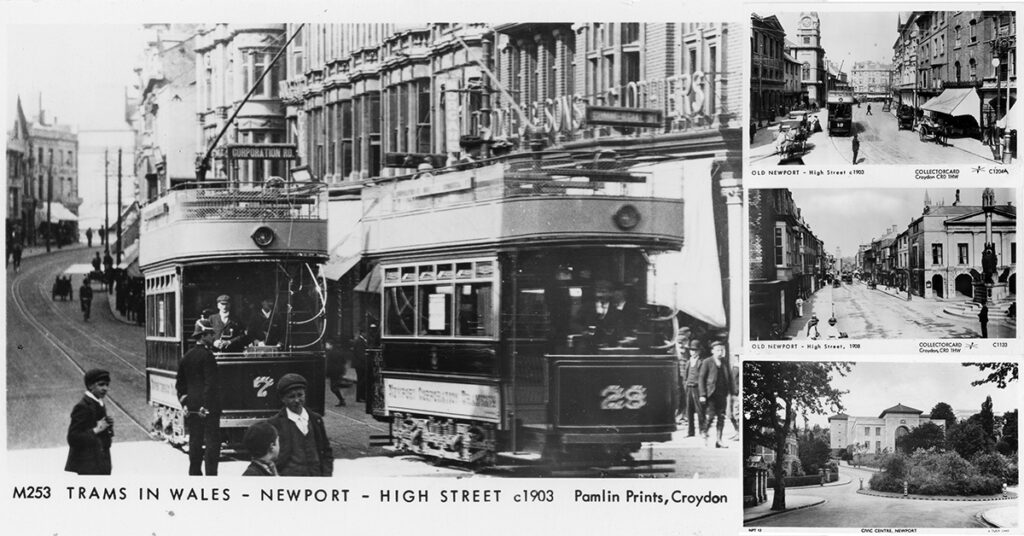
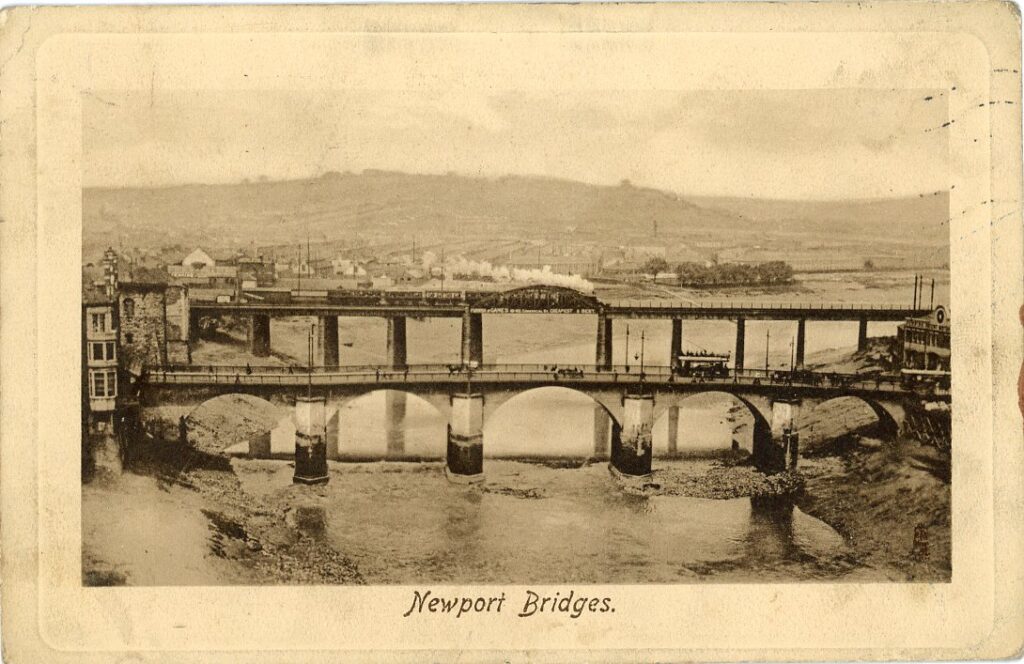
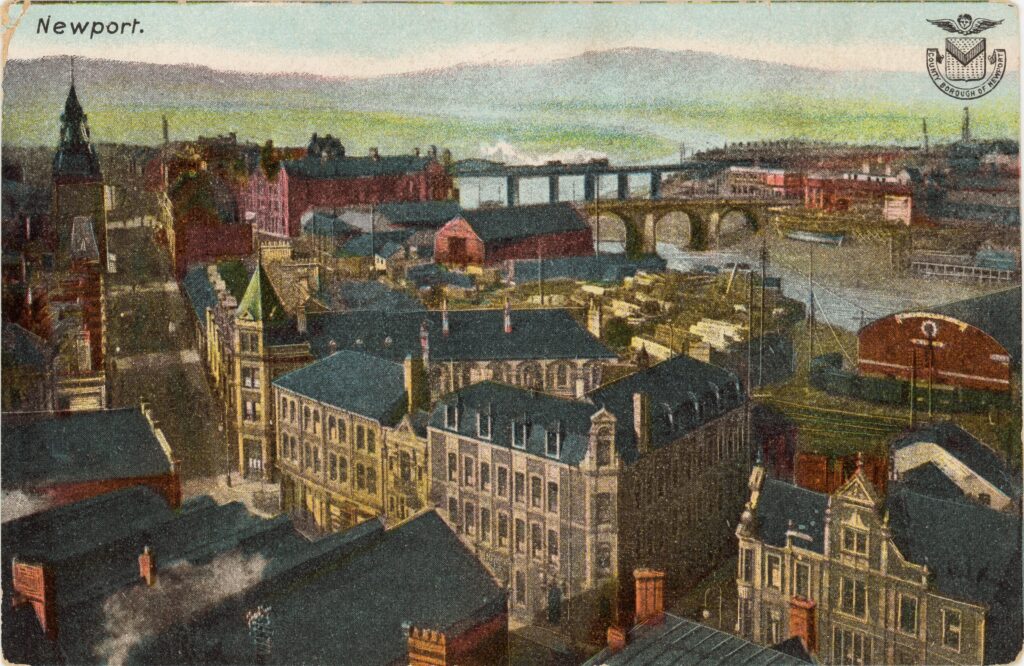
There are the well-known landmarks: the Newport Transporter Bridge, Belle Vue Park, the Royal Gwent Hospital, and the striking architecture of the town centre. But there are also lesser-known or long-lost sights – the original railway bridge designed by Brunel, the iconic Shaftesbury Café at the end of the Town Bridge, and electric trams running along the High Street and up Stow Hill.
Some postcards led me further into research. I was particularly intrigued by images of the Newport Infirmary being used on postcards, dating from around 1905. Located on Cardiff Road, it was officially opened in August 1901 by Viscount Tredegar, who donated the land to replace the overcrowded Stow Hill site. In 1913, it was renamed the Royal Gwent Hospital – a name it still carries today.
The electric trams that appear in many of the cards are another fascinating feature. Newport’s tram system operated from 1903 to 1937, replacing horse-drawn trams with a modern network serving areas such as Malpas, Stow Hill, and Chepstow Road. Run by Newport Corporation Tramways, the system used distinctive maroon and cream cars, connecting the town centre across the River Usk and out towards the docks.
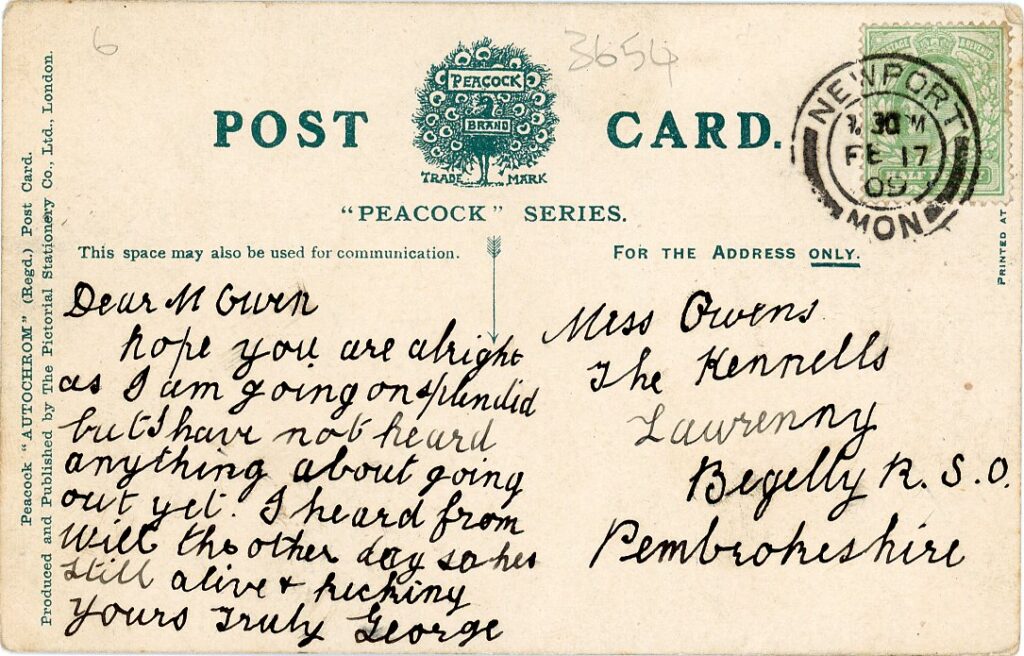
But it is the postcards that were actually sent that tell the richest stories. Using postmarks and stamps, many can be dated precisely. The brief handwritten messages – sometimes no more than a few lines – offer glimpses into everyday life: holidays, health, work, family news, and, occasionally, the wider events of the world.
Many of the messages are brief – often just a few lines – but they offer remarkably vivid glimpses into everyday life in the early 20th century. People wrote about holidays, journeys, work, health, and family news, often in a tone that feels surprisingly modern. In many ways, these postcards were the text messages of their day: quick updates, practical notes, and small reassurances sent across distances.
Some messages simply pass on an address or travel plans, letting friends and family know where they could be reached. Others thank the recipient for letters or small gifts, or describe the weather and local surroundings. A few hint at deeper stories – references to illness, uncertainty, or the movements of friends and relatives during the early years of the First World War.
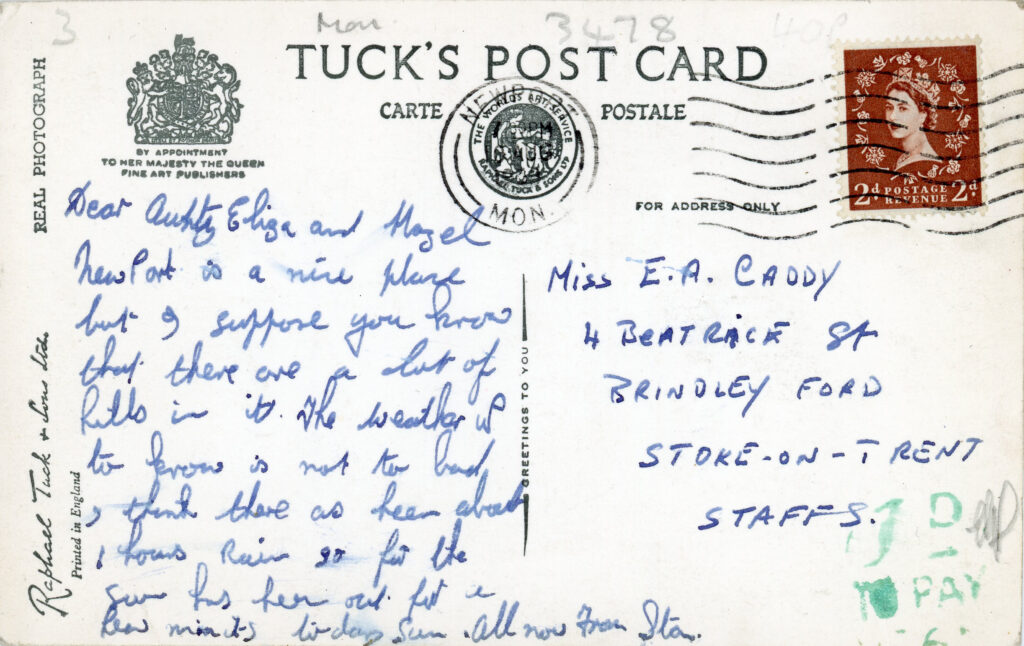
What is striking is how ordinary these communications are. Even in 1914 and 1915, as the war unfolded, many writers focused on the familiar details of daily life. The contrast between the historic events we now associate with those years and the everyday concerns expressed in these messages is both moving and revealing.
The handwriting itself adds another layer of connection. Each card carries the personality of its sender – the flourish of a signature, the hurried scrawl of a quick note, or the careful script of someone taking their time. Deciphering these messages has been part of the enjoyment, turning each card into a small piece of detective work.
Together, these transcribed messages form a kind of informal archive: a collection of voices that might otherwise have been lost. They remind us that history is not only made up of major events and famous figures, but also of ordinary people staying in touch, sharing news, and marking moments in their lives – one postcard at a time.


