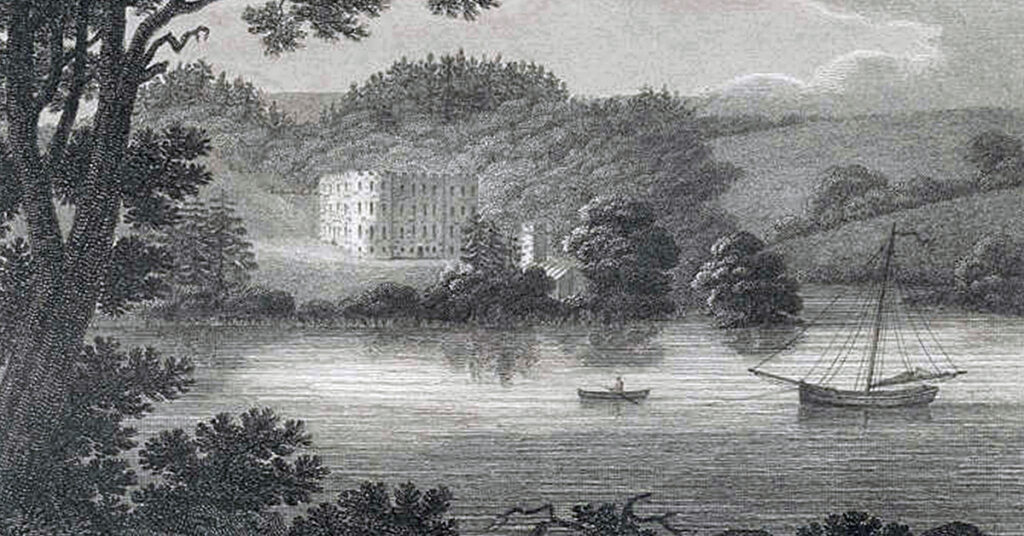
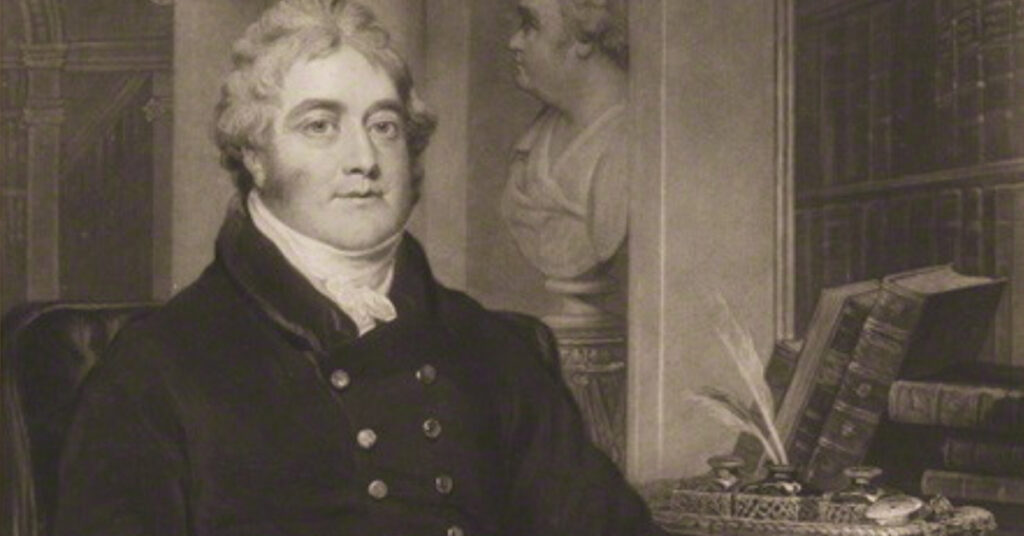
Last year, we had the pleasure of staying on the Slebech Estate in Pembrokeshire while researching the Phillips family. The estate was once owned by Nathaniel Phillips (1761–1826), the fourth great-uncle of our clients. Nathaniel married Mary Dorothea Phillips (1775-1854) in Westminster, London, on 25 February 1796, and together they had four children.
In this blog, we will be looking at their eldest child, Mary Dorothea Phillips (1797–1860), and her remarkable marriage to Charles Frederick, Baron de Rutzen (1795–1874), a Baltic nobleman whose family traced its roots to the seventeenth century in Samogitia, a historic region of present-day Lithuania.
The de Rutzens were among the so-called “Baltic barons,” German-speaking aristocrats who owned estates in Courland (now part of Latvia) and Lithuania. Charles’s father, Baron John Frederick de Rutzen, was an influential landowner and administrator in Courland, and Charles spent his youth on the family estates, travelling widely across Europe before reaching adulthood.
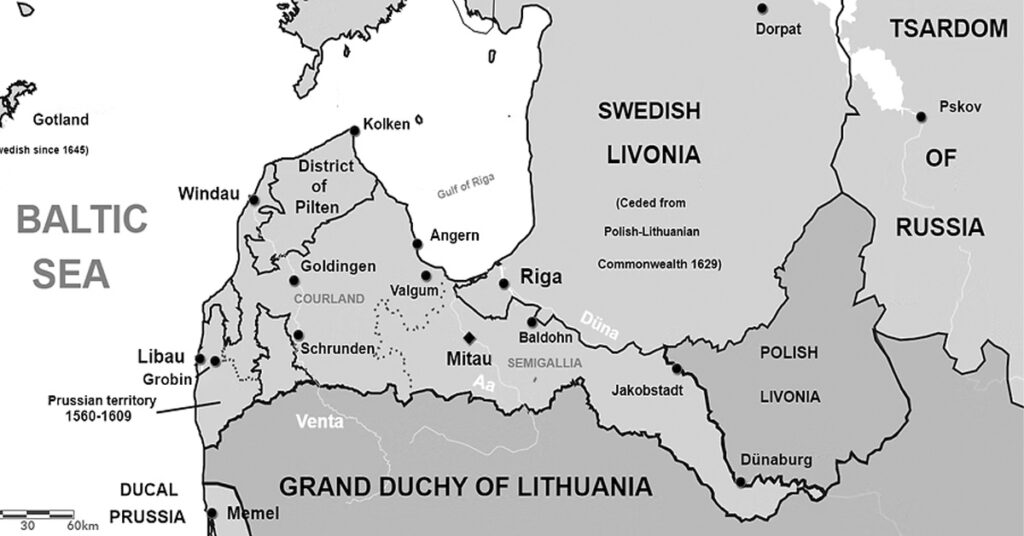
One of the most dramatic stories from his young life took place in 1820, when he rode 165 miles in less than eleven hours to warn a former friend, a Lithuanian Duke, that Russian authorities were about to raid his estate. Thanks to this extraordinary journey, the Duke was able to destroy incriminating papers and avoid arrest. In gratitude, he sent Charles a bill for 200,000 silver roubles, which the Baron politely returned.
In 1821, while in Rome, Charles met Mary Dorothea Phillips, the gifted daughter of the wealthy Phillips family of Slebech. He was captivated by her musical talent and charm after hearing her perform at a fashionable Roman soirée. They were married by Special Licence at Colwich, Staffordshire, on 30 October 1822, by the Revd. Frederick Anson, Rector of Sudbury in Derbyshire.
The witnesses who signed the register were Lord Vernon and Lord Anson, the latter being the bride’s brother-in-law. Among the wedding presents received by Mary Dorothea, was a diamond ring from her brother-in-law Lieutenant-General Sir Alan Cameron
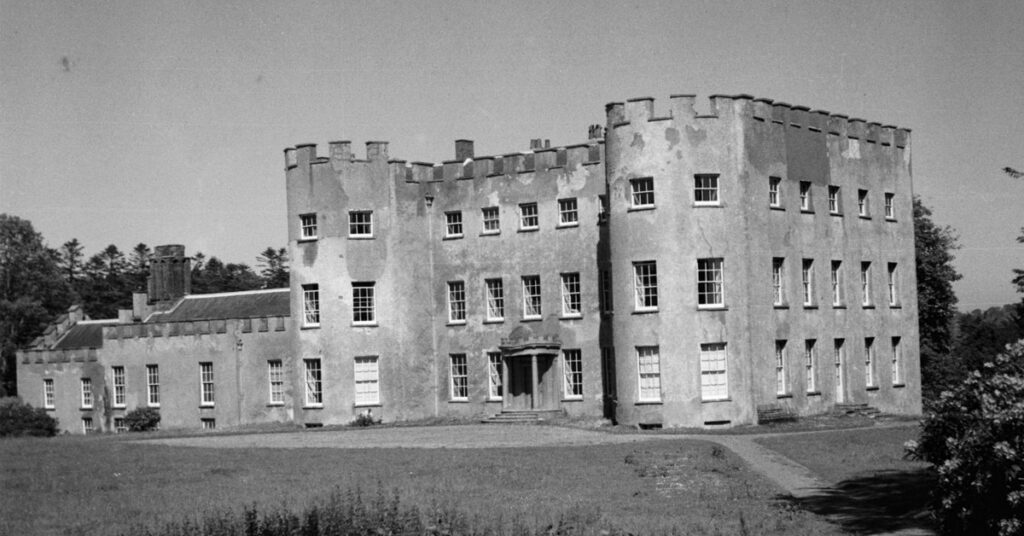
Mary brought considerable wealth to the marriage, including a dowry of £10,000 and, in due course, the inheritance of the Slebech estate. The couple first lived in Brighton and London before settling permanently at Slebech Hall in 1830, where Charles transformed himself from a continental aristocrat into a British country gentleman.
At Slebech, Baron de Rutzen became one of Pembrokeshire’s most colourful landowners. He managed an estate of more than 3,700 acres, built the De Rutzen Arms Hotel and market house in Narberth, and developed a reputation for his enthusiasm for hunting, sport, and fencing. He imported black grouse from Russia and even introduced wild boar into his woodlands, much to the alarm of local farmers. He is also said to have considered importing wolves.
As lay rector and patron of several local churches, Charles undertook significant ecclesiastical projects, including the construction of St John’s Church, Slebech, between 1838 and 1840. His determined, and at times autocratic, style brought him into conflict with church authorities. In 1861, he found himself in dispute with the Bishop of St Davids over claims that he had been responsible for the unauthorised demolition of St Womar’s Church, Minwear, in 1844. The ancient building stood on his land opposite Slebech House.
Charles and Mary moved in distinguished circles and counted among their acquaintances Queen Adelaide and the young Princess Victoria, later Queen Victoria. Mary, an accomplished musician and composer, remained at the heart of family life until her death in 1860.
Their marriage was, by all accounts, a happy and devoted one, and Charles felt her loss deeply. In his later years, he travelled widely across Europe, often accompanied by his daughter Emmeline. He died in Dresden on 15 August 1874, and his body was returned to Slebech to be buried beside Mary in the family vault.
Together, Charles Frederick and Mary Dorothea de Rutzen had seven children, several of whom went on to distinguished careers. Among them were Sir Albert de Rutzen, who became Chief Magistrate of London, and Frederick Leopold de Rutzen, who served as High Sheriff of Pembrokeshire.
Charles Frederick, Baron de Rutzen, remains one of the most fascinating figures associated with Slebech: a cosmopolitan Baltic aristocrat, daring horseman, passionate sportsman, and influential Pembrokeshire landowner whose life bridged the worlds of imperial Russia, Regency Europe, and Victorian Wales.