When researching family history, it is tempting to concentrate on names, dates and relationships. Yet the places where our ancestors lived can be just as revealing. A farmhouse, cottage or street may connect several generations and lead us towards records that would otherwise be overlooked.
Our research into Lodge Farm at Caerleon began as part of a project for clients whose family had lived there. What emerged was far more than the story of one household. By following the history of the property, we uncovered more than three centuries of changing families, farming traditions, land ownership and community life.
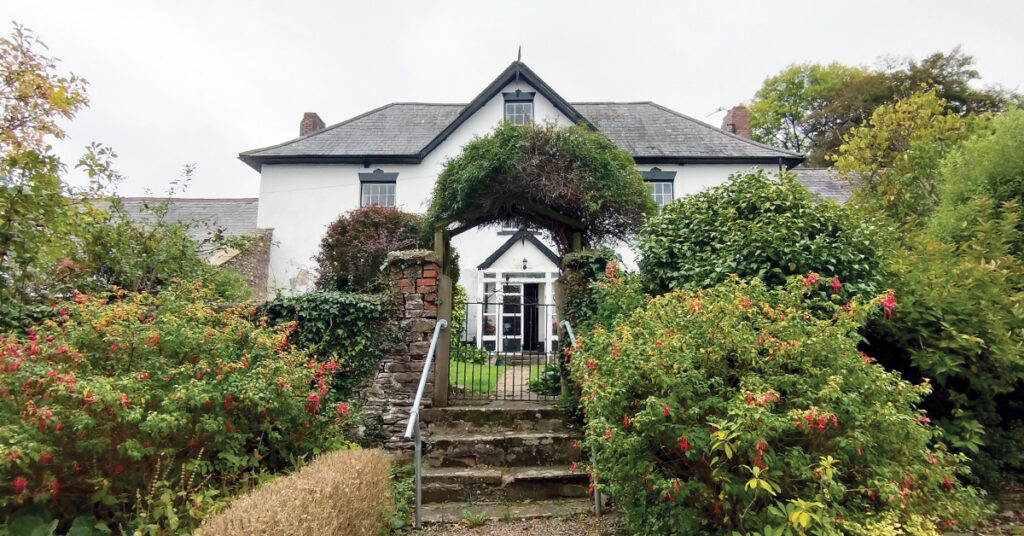
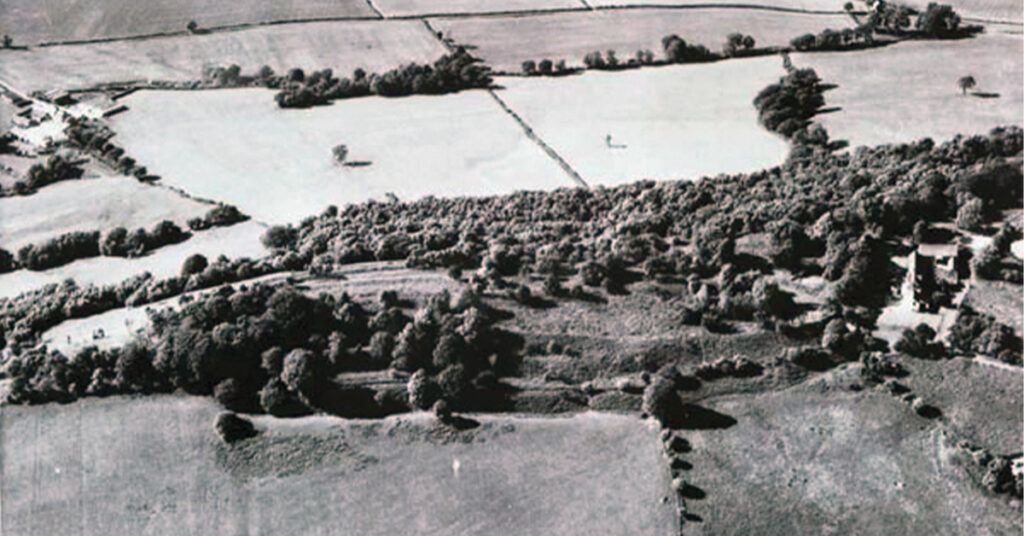
Lodge Farm stands on Lodge Hill in Caerleon, an area with a long and complex history. The name “Lodge” is thought to relate to the hunting lodges once associated with medieval parks such as Caerleon Park. The farmhouse was probably built between 1650 and 1660, although one nearby outbuilding may be older. These physical clues provided a useful starting point, but buildings do not tell their stories through architecture alone. To identify the people who had occupied the farm, we needed to combine evidence from a range of historical sources.
The earliest family we identified at Lodge Farm was the James family, whose association with the property appears to have begun in the mid-17th century. Bradney’s History of Monmouthshire records that their ancestor, James ap John Jenkin, later known as James Jones, settled there in about 1650. His descendants remained connected with the property for several generations and had close links with the Catholic Morgan family of Llantarnam.
This led us to one of the most striking episodes in the farm’s history. William and Dorothy James were connected with the Jesuit priest David Lewis, who was executed in 1679 amid the anti-Catholic persecution associated with the Titus Oates Plot. William and Dorothy appeared as witnesses at his trial, an involvement that caused considerable anger among local Catholics. Later members of the James family were buried at Llantarnam, then an important centre of Catholic life. Their story demonstrates how research into a single property can open a window onto much wider religious and political events.
By the early 18th century, Lodge Farm belonged to the Hanbury family of Pontypool. Evidence of their ownership survives in the fabric of the farm itself: the initials “JCH”, for John Capel Hanbury, and the date 1716 are carved into a barn wall. Details such as these are especially valuable when documentary evidence is incomplete. In this case, a physical inscription helped confirm the property’s connection to a prominent Monmouthshire landowning family.
Parish records place Charles Griffiths at the property in 1753. During the early 19th century, Lodge Farm was occupied by Charles Charles and his family, who worked as victuallers and butchers. Their occupations remind us that rural households did not always depend upon farming alone; families often combined agricultural work with trades and local businesses.
By 1844, Henry Rowlands was farming at the Lodge and paying annual rent of £50 to the Hanbury estate. His son, Joseph Rowland, was recorded as the occupier about a decade later. This part of the research illustrates the importance of looking beyond civil registration and census returns. Estate papers, rentals, maps and land records can identify landlords and tenants, show how long a family remained at a property and reveal the economic circumstances in which they lived.
The spelling of surnames can also vary between records. Rowlands and Rowland may refer to members of the same family, but such variations must be assessed alongside dates, relationships, occupations and locations rather than accepted solely because the names look similar.
In the late 19th century, William and Margaret “Maggie” Parry farmed at the Lodge, probably from around 1885 until 1891. Their residence was particularly relevant to the wider family-history project because they belonged to the family line under investigation. After leaving Lodge Farm, William and Maggie moved to Penrhos Farm, also in Caerleon. They continued farming there before retiring to Broadwalk in the village.
Following a family from one farm to another helped us build a fuller picture of their lives. It also showed why researchers should not assume that a family’s disappearance from one set of records means that they left the district. Agricultural families frequently moved between neighbouring farms as tenancies, opportunities and family circumstances changed.
The farm entered a new phase in 1895, when William Edgar Baker, from a well-known landowning family at Redwick, moved there. In 1903, William was followed by his brother Stephen Herbert “Bert” Baker, who took over the farm after marrying Annie Gale. A further change came in 1926, when their brother George Arthur Baker joined Bert as the freehold was offered for sale. George purchased the property, which at that time comprised approximately 163 acres of woodland, arable fields and pasture, together with the farmhouse and agricultural buildings.
George assumed responsibility for the farm during the 1930s after Bert moved to Langstone. A keen horseman, he kept horses at Caerleon racecourse and was part of the area’s farming and equestrian community. A 1937 sale notice records the dispersal of his cattle, sheep and equipment, followed by the sale of the freehold farm. Sale notices can be exceptionally informative in house and farm histories. They may describe acreage, buildings, livestock, machinery and household contents, allowing us to reconstruct a property at a particular moment.
George’s son, Arthur Valentine Baker, remained at Lodge Farm with his wife, Kathleen, until the late 1950s. A dairy farmer and breeder of Shire stallions, Arthur appears to have lived at Lodge Bungalow, probably as a tenant of the property’s new owners. Local reports add a more human dimension to the documentary record. Arthur’s sheep and horses occasionally strayed onto nearby roads, while in 1946 two public rights of way were formally established across the farm. Both routes remain in use.
Mr and Mrs Till moved to Lodge Farm during the 1950s. Although the property was no longer operating as a traditional farm, it continued to play an important role in local life. The Tills hosted an annual garden party for disabled people and their carers from across Monmouthshire. The grounds were also used for meetings by groups including the Llantarnam Women’s Institute and the Monmouth Unionist Association, often with marquees erected for summer gatherings.
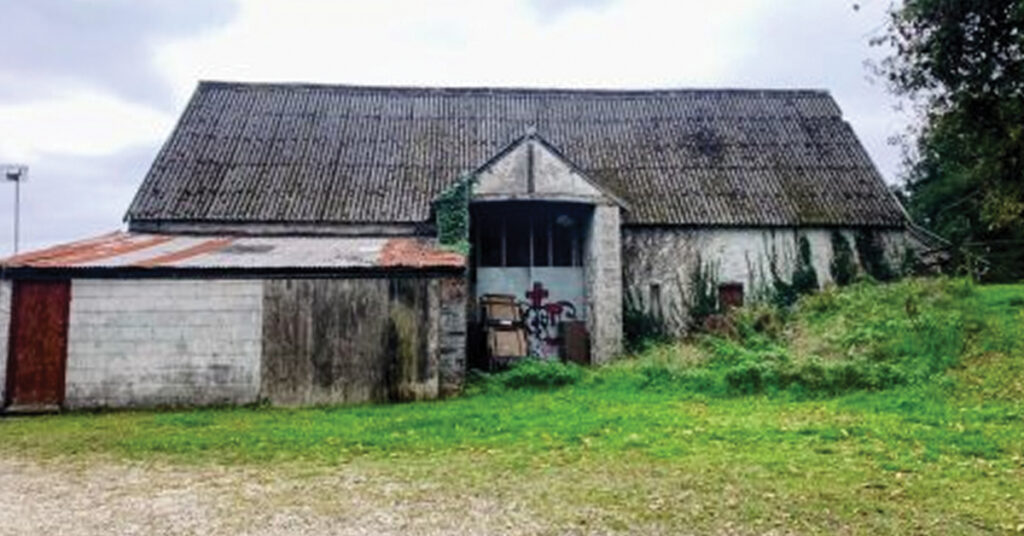
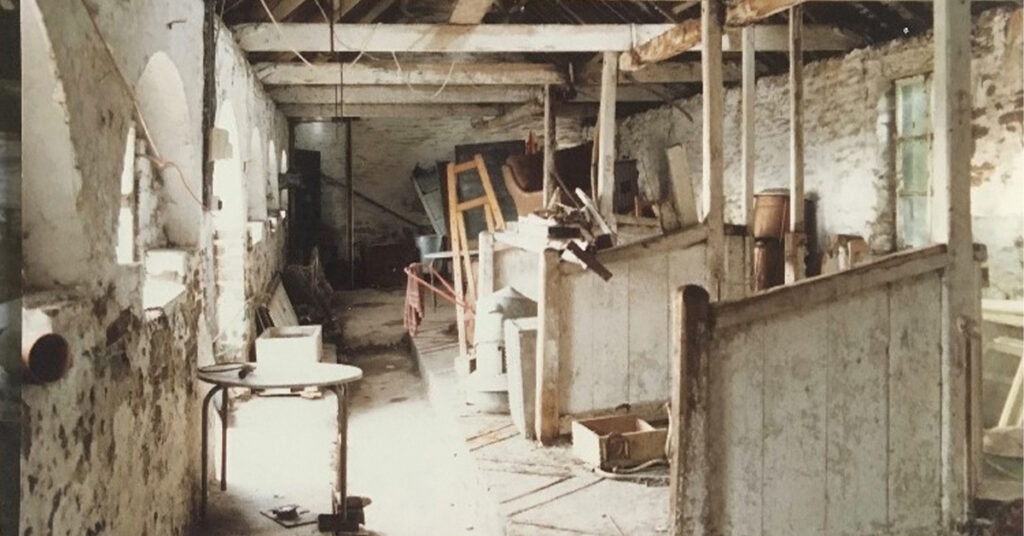
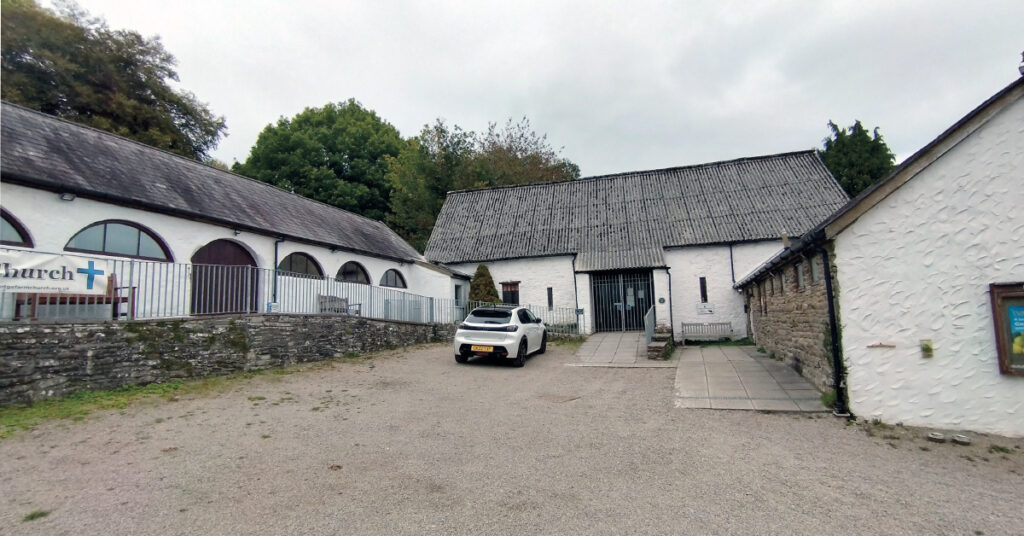
By the late 20th century, Lodge Farm’s agricultural buildings had deteriorated. Meanwhile, the Caerleon Christian Fellowship, formed in 1969, was looking for a permanent home after meeting for years in houses, chapels and halls. In December 1980, the Fellowship purchased the derelict farm buildings and began converting the barns and outbuildings into a place of worship. Lodge Farm Church opened in June 1983.
The farmhouse and the Lodge Farm Evangelical Church were granted Grade II listed status in 2002. The former farm buildings continue to serve a thriving congregation, while the farmhouse remains a family home. Much of the surrounding farmland was developed for housing during the 1960s and 1970s, creating the Lodge Farm estate.
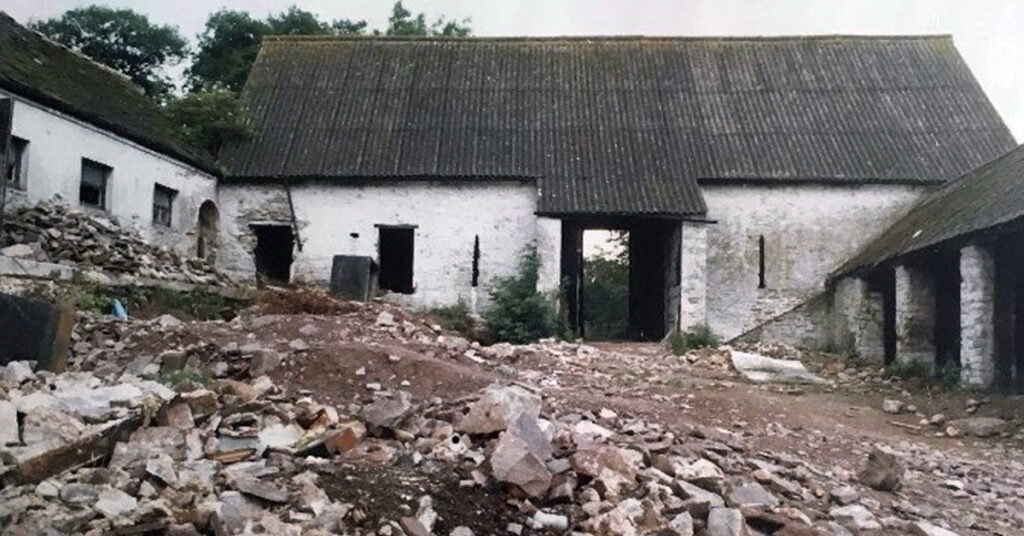
We visited Lodge Farm in October 2025. Seeing the surviving buildings gave us an opportunity to compare the documentary evidence with the site itself. The restored barns, former cowshed and courtyard make the farm’s earlier purpose readily visible. Features such as the 1716 inscription also take on greater meaning when viewed in their physical setting. Although not every family-history project requires a site visit, walking the land can clarify distances, boundaries, routes and relationships that are difficult to appreciate from records alone.
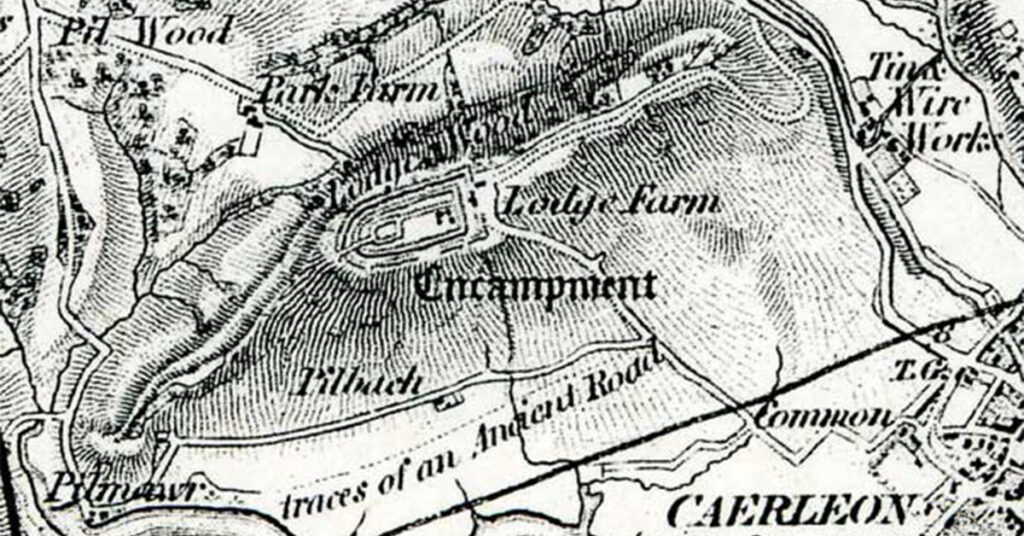
No single document revealed the complete history of Lodge Farm. Instead, its story had to be assembled gradually by comparing evidence from different periods and sources. Parish registers and burial records helped us establish family connections and religious associations, while census returns and civil records identified households, occupations, birthplaces and relationships. Estate rentals and land records enabled us to distinguish between ownership and occupation and to trace changing tenancies. Historic maps showed the farm’s location, boundaries and relationship with neighbouring land, while directories and local histories provided valuable context about its residents, landowners and associated businesses. Newspaper reports and sale notices offered glimpses of everyday life, including livestock sales, community events and local incidents.
The history of Lodge Farm spans Catholic families living through religious persecution, tenant farmers working land owned by a major estate, agricultural families moving between nearby farms, livestock breeders, community gatherings and the conversion of redundant farm buildings into a church.
For us as researchers, the project reinforced an important principle: family history is also the history of place. By placing our clients’ ancestors within the longer story of Lodge Farm, we were able to go beyond a conventional family tree. The result was a richer account of the environment in which they lived and the succession of families who shared that place across more than three centuries.
You can read our original post on the Skinner Family History website.